
History of Santa Cruz Academy
Don Gregorio Anonas founded Santa Cruz Academy then, Western Luzon Academy in 1926. In 1933, it was bought by Mr. Arsenio de Perio and operated it under its old name until it was finally changed to Santa Cruz Academy in 1936. The name was again changed to Santa Cruz Junior College in April 1951 when it started to offer a two-year B.S.E.E. – E.T.C. and a complete secondary course. In 1956, the school again used its old name, the Santa Cruz Academy still offering complete Elementary and Secondary courses, two year B.S.E.E. – E.T.C. and Secretarial courses.
In line with the Society of St. Columban’s thrust of strengthening faith through Catholic Education, the Columban Fathers headed by Rev. Fr. Kieran Heneghan then, the parish priest of St. Michael Parish, Sta. Cruz, Zambales offered to buy the rights to operate the school. On July 6, 1965, the right to operate the school was finally sold to the Columban Fathers minus the Elementary and College Courses which were retained by the De Perio family.
The transfer of the school’s management into the hands of the Columban priests was a realization of a dream, of putting up a Catholic School in this part of the province.
Since its incorporation on February 3, 1967, the school has been managed by the Columban Fathers using the same name SANTA CRUZ ACADEMY, INC. and was moved to its new site located in front of the Catholic Church with the following Administrators in succession:
DIRECTORS:
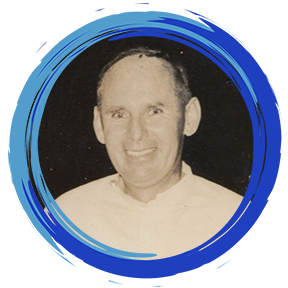
Rev. Fr. J. Kieran Heneghan
(1965 – 1973)

Rev. Fr. Michael Duffin
(1973 – 1979)

Rev. Fr. Paul Mc Gee
(1979 – 1982)
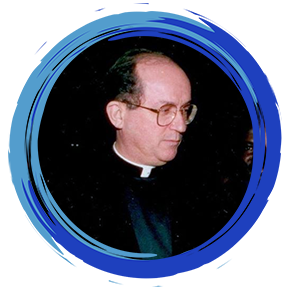
Rev. Fr. Edward McKenna
(1982- 1985)
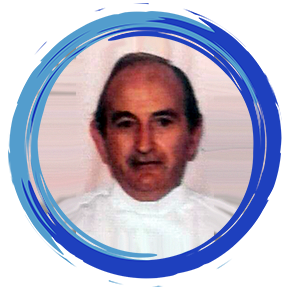
Rev. Fr. Francis Awburn
(June 1985 – July 1987)

Rev. Fr. Francis O’Kelly
(July 1987 – May 1988)

Rev. Fr. Patrick Duggan
(1988 – 1990)
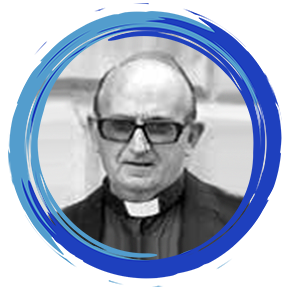
Rev. Fr. Francis Awburn
(1990 – 1991)

Rev. Fr. Donal O’Dea
(1991 – 1993)

Rev. Fr. Donal Bennet
(1993 – 1996)

Rev. Fr. Ernesto C. Raymundo
(1996 – 2002)
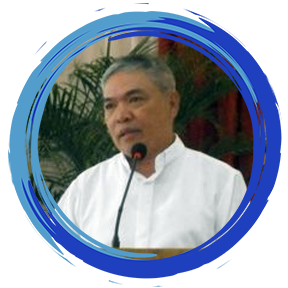
Rev. Fr. Renato Roque Villanueva
(2002 – 2003)
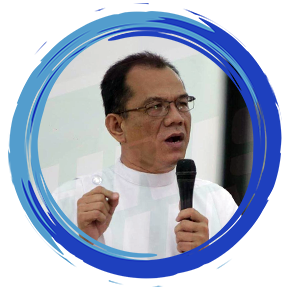
Rev. Fr. Jaime Escurzon
(2003 – 2005)
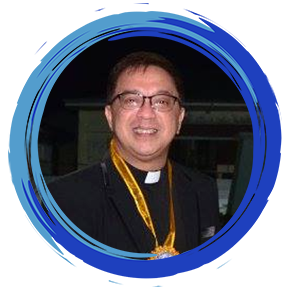
Rev. Fr. Renato Roque Villanueva
(2002 – 2003)
LAY HIGH SCHOOL PRINCIPALS:
Mr. David Salinas 1965 – 1966
Miss Natividad Caguioa 1967 – 1970
Miss Felipa Marty 1971 – 1994
Mr. Rolando Moselina 1995 – 2011
Mrs. Dedima O. Misola 2011 – 2015
Miss Marites M. Merza 2015 – present
Mrs. Letty Espinosa (2014-2019); Mrs. Jennefer Misola- Junior High School Asst. Principal (2019-April 2021); Miss Marigail Dionisio – Senior High School Asst. Principal (2019–May 2021); Mrs. Jennefer Misola-Junior and Senior High School Assistant Principal (May 2021 to present); and Mrs. Adora Esteban, the School Fiscal Officer, is considered one of the School Administrators appointed by the Office of the DIEFI Board of Trustees Chairman and Superintendent (June 2020 to present).
In 1983, there was a Proposed Addition of the building (Building Number 3) of Santa Cruz Academy, Inc. It added six classrooms under the directorship of Rev. Fr. Paul McGee and continued by Rev. Fr. Edward McKenna.
After the three consecutive decades, in April 1997, the Columban Fathers turned over the management of the school to the Diocese which continued its unstinted and loyal service to God and country by blending the wisdom and experience of the times trying to cope with the advances in science and technology without sacrificing the spiritual formation of the students. The Filipino Diocesan priests who became the school directors were Rev. Fr. Ermesto C. Raymundo, Rev. Fr. Renato Roque Villanueva, Rev. Fr. Jaime Escurzon, and Rev. Fr. Emmanuel Jose S. Montes.
In April 1991, there were Structural Repairs of the school building under Rev. Fr. Michael Duffin.
November 2001, under the initiative of the School Director, Rev. Fr. Ernesto C. Raymundo with Mr. Rolando Moselina as the Principal, there was an “As-Built Plan” A3 size of the three-storey building project, the annexed building (Building Number 4) on the north wing including the canteen, and two adjacent offices for SMMAK CBR and SCA Alumni were constructed.
Santa Cruz Academy, Inc. continued to offer quality secondary education (First Year up to Fourth Year) until it adapted the K to 12 Basic Education Program of the Department of Education in the Academic Year of 2012 – 2013 under the principalship of Mrs. Dedima O. Misola.
This K to 12 Program, though it covers Kindergarten and 12 years of Basic Education: Six (6) years of elementary education, Four (4) years of Junior High School, and Two (2) years of Senior High School (SHS) for the reasons of giving ample time to the students to have their mastery of concepts and skills, develop a lifelong learning, and prepare them for tertiary education, employment, and entrepreneurship, here at Santa Cruz Academy, Inc., started its Junior High School implementation in the Academic Year of 2012 – 2013. From Secondary Education of the learners who were in their “First Year, Second Year, Third Year up to Fourth Year”, it was changed to JUNIOR HIGH SCHOOL from Grade 7, Grade 8, Grade 9 up to Grade 10. After four years, there was no graduation rites occurred in compliance to the Department of Education Program nationwide, instead there was a “Moving Up Ceremony” for the Grade 10 students who were called as “Completers” last March 28, 2016.
School Year 2016 – 2017, SENIOR HIGH SCHOOL under Government Permit Number 274 which was granted in the year 2015, was being offered to cater its completers from the institution per se and from other school feeders nearby who opted to enjoy the 100 % Voucher Program, another government subsidy to private schools nationwide.
Last February 5 – 10, 2017, Santa Cruz Academy Inc. celebrated its 50 years Founding Anniversary. The major events for a six-day celebration of the school’s existence and milestone were the following: February 5 – Institutional Mass attended by the students, faculty and staff, Family Council Officers and members and SCA Alumni from Batch 1966 to Batch 2015 along with the other community members; February 6 – Groundbreaking of the Golden Jubilee Building (Building Number 5) presided by the School Director, Rev. Fr. Emanuel Jose S. Montes and the featured “Bayle Ha Dalan” (Street Dancing) performed by select Grade 7 up to Grade 11 students; February 7 – Invitational Games from other ACSDI and public schools with “World of Fun and Booths” managed by the Student Council Officers and members under the advisorship of Miss Rhea Minas until its continuation the next day, February 8, followed by the night’s affair: “Search for Mr. and Miss SCA 2017”, participated by a pair per class; February 9 was a special day for Family Council Officers and members and a night of “Recognition for the THEN and NOW Administration, Faculty and Staff (1967 to 2017) which was graced by the presence of the Diocese of Iba Administrator, Rev. Fr. Daniel O. Presto and other former School Directors; and the last part of celebration, February 10, was scheduled for the Grand Alumni Homecoming headed by the SCA Alumni President, Dra. Cherrylyn P. Merza, other officers, members and Batch Representatives. There was a motorcade during the day and the night was highlighted by the Alumni that featured their “Regodon de Honor”.
On June 22, 2018, the institution officially welcomed the new bishop in the person of his excellency, Most Rev. Bartolome G. Santos Jr., DD. For two consecutive School Years, 2018 up to 2020, there was only pure evaluation and planning on how to establish a system for the whole Diocese with the inclusion of parochial schools by which SCA, Inc. is a member.
Last April 2020, despite the pandemic caused by COVID19 or Corona Virus, the systemic implementation of the system started through reassignments and repositioning of the clergy, omitting the directorship in each parochial school, thereby giving the headship to Rev. Fr. Raymann G. Catindig, the DIEFI Superintendent. He took hold the position in June 2020 up to the present handling the 20 Catholic private institutions from Sta. Cruz to Olongapo. It was in the same year that marked the beginning of the major changes caused by pandemic, the so-called “New Normal” era with Blended or Flexible Learning educational platforms by which the integration of technology had played great role. SCA, Inc. had been granted the approval from the Department of Education, offered the Online and Modular Distance Learning for two consecutive School Years, 2020-2021 and 2021-2022. On the Academic Year of 2022-2023, called as the “New Normal”, the school catered to the needs of the learners by utilizing the Hybrid Learning Program, a combination of the three learning modalities: Face-to-Face Classes, Online and Modular Distance Learning supported by synchronous and asynchronous sessions. Meanwhile, in the school year 2025-2026, the institution is one of the 891 both public and private schools nationwide and the only DIEFI member school in Zambales which was approved by the DepEd and participated in the pilot implementation of Strengthened Senior High School Curriculum. This SSHS Curriculum is a progressive enhancement of the K–12 program, designed to equip students with 21st-century skills, values formation, and career-ready competencies. Santa Cruz Academy, Inc., as one of the pilot schools, is implementing this curriculum for its Grade 11 students, ensuring that learners are not only academically competent but also prepared for higher education, employment, and entrepreneurship. In the next SY 2026-2027, the SSHS Program will be in full blast wherein both grade level – 11 and 12 experience the reformed curriculum with reduced subjects. Santa Cruz Academy, Inc. continue to offer quality Catholic education in the two levels: Junior and Senior High School under the umbrella of the Diocese of Iba Educational Foundation Incorporated (DIEFI), formerly named as the Association of Catholic Schools of the Diocese of Iba (ACSDI). It is affiliated as one of the member-schools of the Catholic Education Association of the Philippines (CEAP) nationwide and recertified as a Junior High School institution-passer with a rating of ABOVE THE STANDARDS given by Private Education Assistance Committee (PEAC), a private organization that assess, assists and assure the private institutions to become effective schools in delivering quality educational programs with government.